 "It is too easy to judge people anyways, were idiot humans that know less then we think yet percieve to have all the answers because some book said so." (SocietyVs)
yes- to presume to have arrived is to make plain how great the distance yet to travel. my gosh, i hate it when i sound like a fortune cookie!
what i mean by all that drivel is simply that i agree... especially with the 'too easy' part. nobody's got it all together.
a friend of mine and i were talking recently about whether the difference between judgement and condemnation is simply semantics... you see, we are all reminded again and again from others that we mustn't be quick to judge- however, these statements usually come from people who are busy judging pastors and the like as being too judgemental. i grow frustrated with this whole reverse bigotry thing that leaps to the conclusion that, by trying to understand the behaviours of another in order to help them move ahead in their faith journey, a pastor is sitting
in judgement over a parishioner. it's more a case of trying to walk alongside someone, offering some coaching.
in my view, judgement is being able to weigh facts justly and make a decision towards a resulting plan of action. our judgement should be a good thing, an endowment.
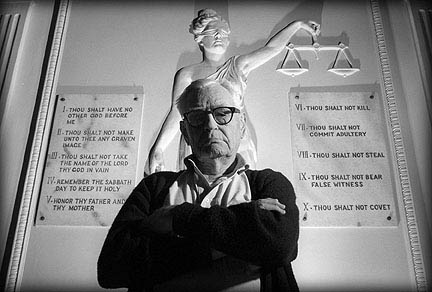
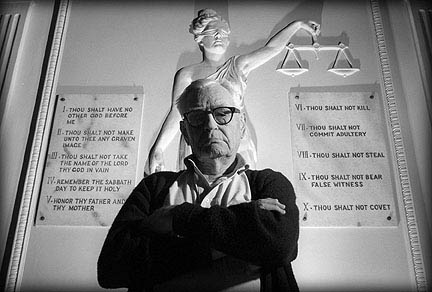
what qualifications must a judge in a court of law have? i don't know, but i imagine that, apart from very specific credentialling, things like extensive personal legal experience, a keen understanding of the laws of the land and an awareness of precident all have to be part of the deal. there is, however, one more thing: wise decisiveness. the ability to use all of the information available in order to set out a plan which, through due process, intentionally brings justice back into balance.
i'm not talking about corruption and i'm not talking about abuse of an office- we know those things happen and we know that they are wrong. i'm just acknowledging that in our culture, where the judicial process is still somewhat respected, the judges are not typically suspect- it's the lawyers that often bear the burden of our mistrust, largely because of our huge need for them, and the suspician that arises out of needing someone and having to place our faith and our cash in their integrity as they interact within a system that we find completely alienating due to its jargon and rhetoric alone, much less its power to which we are subject... (but that's a whole nother blog.)
where it breaks down for people is in confusing judgement with condemnation. i think that when we flippantly quote the bible to each other 'judge not, lest ye be judged' we need to be very clear as to what we are really saying and to ensure that we are not implying the condemnation of others. most of the time, when people remind us of how we are not to judge another, they are speaking about the importance of not condemning... sadly, they are often doing simply that to those whom they presume to admonish- defaulting in their suspician to the notion that anyone who uses their endowment of God-given judgement does so in order to condemn others and move ahead in some line.
the easy condemnation call is a dangerous default that hurts people who are just trying to live their lives, attending to the needs made evident to them. perhaps it would help if we spoke of active discernment (in the non
spiritual-gift sense) and the importance of applying that discernment in those moments where we are tempted to condemn another.
have i been hurt by this default of suspicion?
maybe once or twice- does it show?
Labels: grace, judiciary, scriptural interpretation